Sixteen hundred guilders
The invoice
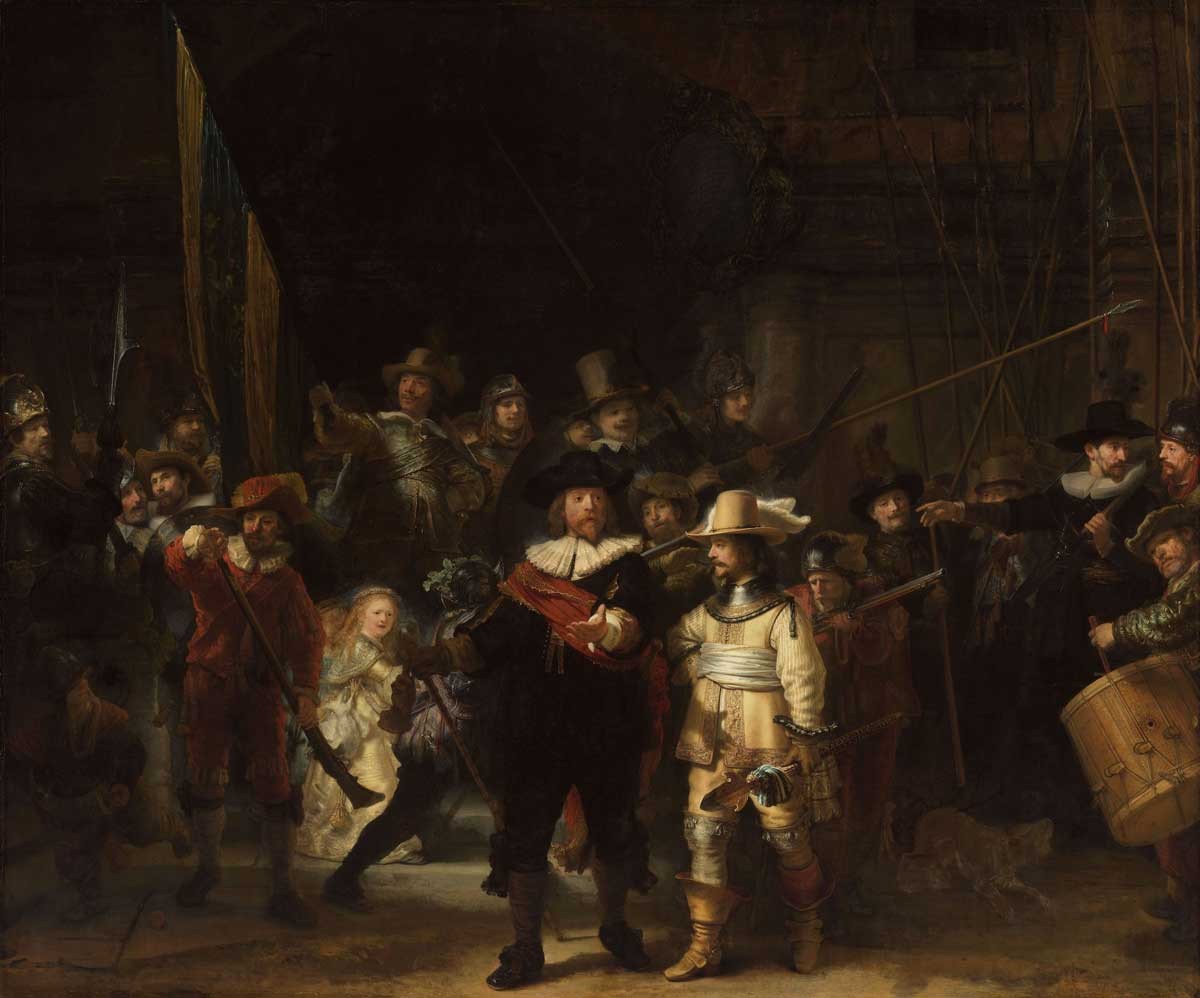
In the spring of 1642 a cloth merchant called Jacob de Roy wrote to his captain to complain. He had paid ninety-eight guilders towards the company’s group portrait, the same as the men at the front, and when the canvas went up in the great hall of the Kloveniersdoelen he could find one of his eyes and part of a hat. “I would like the money back or the rest of my face,” he wrote. The letter survives because Captain Frans Banninck Cocq kept everything, including his laundry lists.
There were eighteen paying men. Rembrandt van Rijn, who was thirty-six and two years behind on the mortgage of a house on the Breestraat, had quoted sixteen hundred guilders for the whole thing. The men divided it among themselves according to how much of each of them would show. Nobody had agreed how that would be measured.
The yard on the Breestraat
The canvas was more than four metres wide and would not go through the front door, so he painted it in the yard behind the house, under a sailcloth roof he rented from a ship’s chandler by the week. It took most of a year. His apprentices remembered that he worked from the right-hand side towards the left and that he would not have anyone standing behind him. “You’re in my light,” he told one of them, who was standing in the kitchen at the time. His wife stayed upstairs that spring. He went up at midday and again at four.
He also moved things the men had paid for. The captain asked to be shown with his hand held out towards his lieutenant. He got the hand, and its shadow, which lands on the front of the lieutenant’s pale coat. Willem van Ruytenburch asked if the shadow could be taken off. “It’s where the light is,” Rembrandt said, and left it where it was.
The girl
The last figure to go in was a girl nobody had paid for. She is small and lit brighter than either officer, in a gold dress, with a dead chicken tied at her waist by its feet. The model was the eleven-year-old daughter of the woman who sold eggs on the corner. She was paid four stuivers a sitting and allowed to keep the chicken. Making room for her meant moving a musketeer who had already paid, further back, to where you can now see his helmet and not much else.
The drummer
The drummer at the right edge was not a guardsman either. Jan Jorisz was hired for parades at six stuivers a day, and he is in the picture because the company insisted on a drum. Seven years later he paid a copyist eleven guilders, close to two months of drumming, for a small version of the painting and hung it at the foot of his bed. His sister asked what he wanted with a picture of men who had never once bought him a drink. He said it was the girl. Then he said it wasn’t, and went out.
The painting has been moved six times since and trimmed down one side to fit a wall. At the museum that holds it now, the night staff switch off the gallery lights from the drum end first. Nobody working there knows who started it.