Thursdays, half past nine
Eleven spools
Karla used forty-one metres of black cotton tape, cut by hand into strips about as wide as a pencil, and a little over three thousand metres of black thread. That comes to eleven spools of the Gütermann thread Ghada Amer has bought from a haberdasher on West 37th Street since 1999. She always buys eleven. The shop gives a discount at ten and she likes to have one spare.
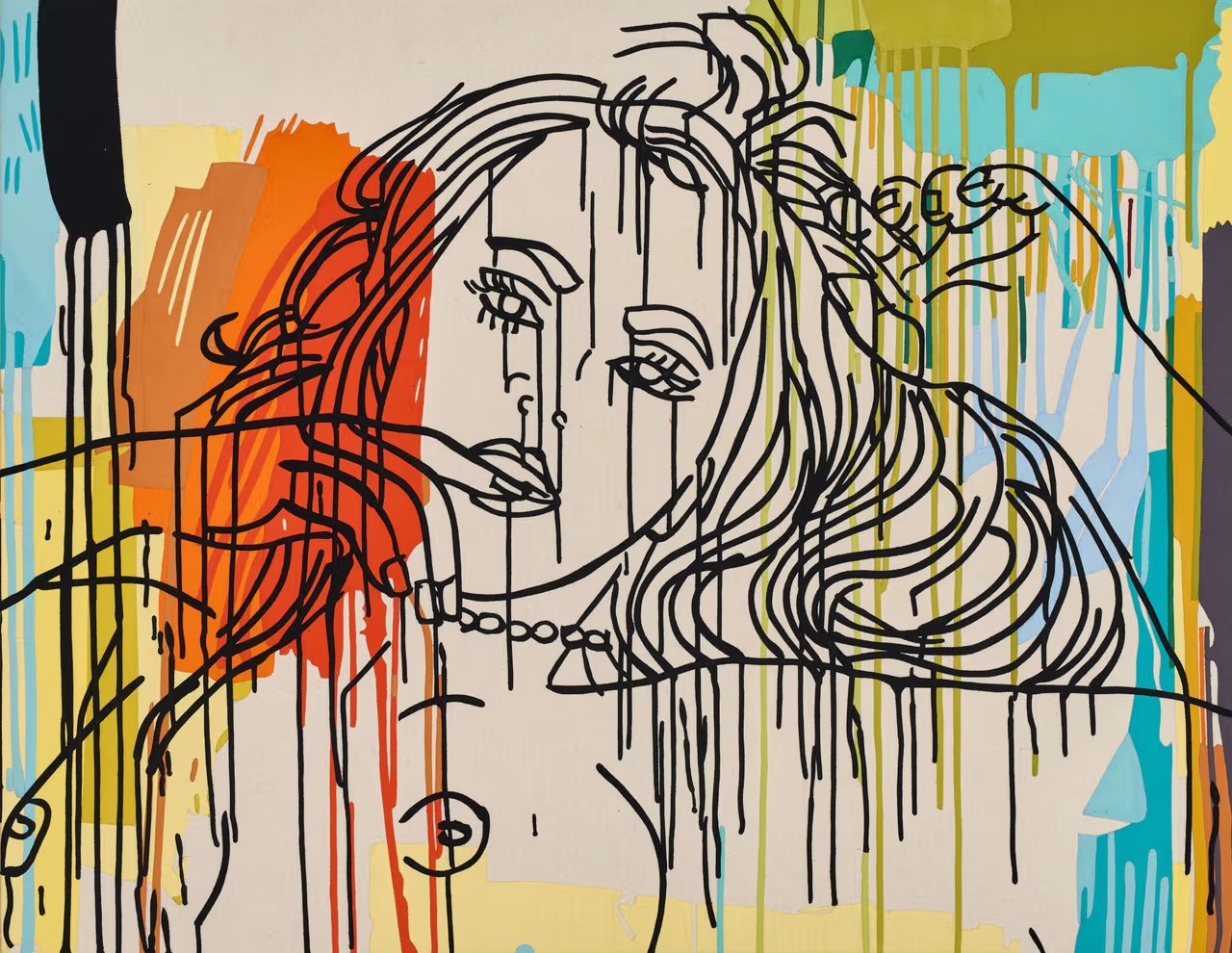
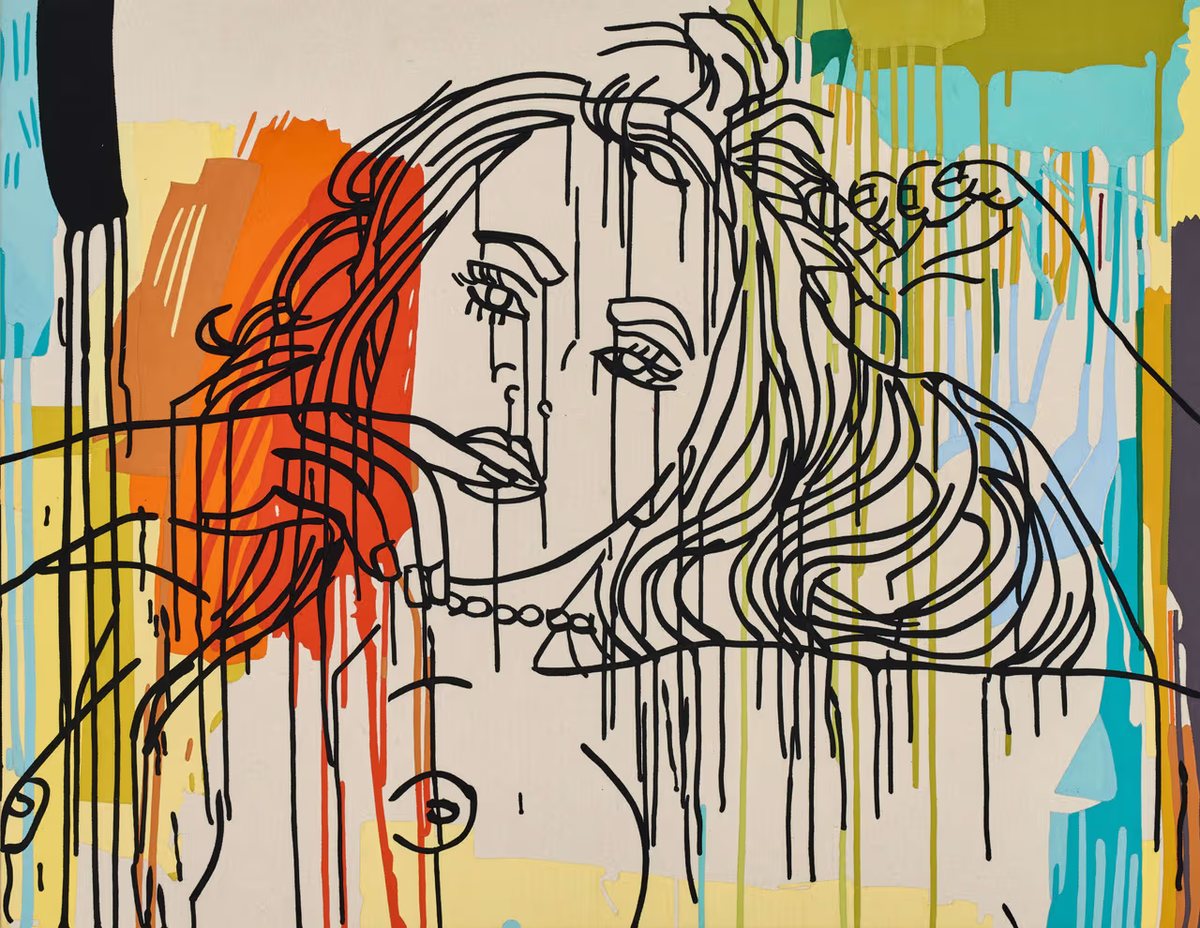
Every line in the picture is fabric. The hair, the eyelids, the beads at the throat and the hand at the top right are strips of cloth pinned down and stitched along both edges on a Juki industrial machine she bought secondhand from a curtain maker in Queens. The work took fourteen weeks. The needle broke nine times, which she considers about average.
The dry cleaner’s
Amer was sixty-one when she made it. She works out of a former dry cleaner’s on a corner in Harlem that she has rented since 2016, and the rail for the hangers still runs along the ceiling. She uses it to hang canvases while the glue on the backing dries. Her assistant, Marisol, comes in on Mondays, Tuesdays and Fridays and does most of the cutting. Nobody else uses the machine.
Across the road is a laundromat with a long front window and a row of orange plastic chairs facing the street.
The third chair
The woman in the work sat in one of those chairs on Thursdays for most of a winter. She arrived at about half past nine, put a load in the machine nearest the window and waited with her phone in her lap, twisting a piece of hair around two fingers. She wore a string of plastic pearls. Amer watched her from the studio, made drawings on the back of an electricity bill, and never crossed the road.
“I didn’t want to ruin it by knowing,” she said. “If she tells me her name then it’s her. I wanted the waiting.”
She called her Karla, after nobody in particular. In the picture she is somewhere in the middle of a thought, eyes down, mouth a little open, as if she has started to answer a message and stopped.
The leak
The drips were not the plan. In March a pipe burst in the flat upstairs and water came through the ceiling, running a brown line down the lower half of the canvas, which was hanging from the rail at the time. Amer thought about starting again. Instead she cut drips out of cotton in yellow, orange, olive and a blue that matches the laundromat’s sign, and sewed them over every place the water had been, and a good many places it had not. None of them is paint.
Six o’clock
Karla sold in the first week of its showing in Cape Town, to a buyer who asked not to be named. Amer did not fly out for the opening. She said she was behind on another piece, which Marisol says was true for about a day.
She still opens the studio at six, fills a Russell Hobbs kettle whose lid has to be held down, and threads the machine before she does anything else. On Thursdays at half past nine she makes a second cup and drinks it standing at the window.